11.png)
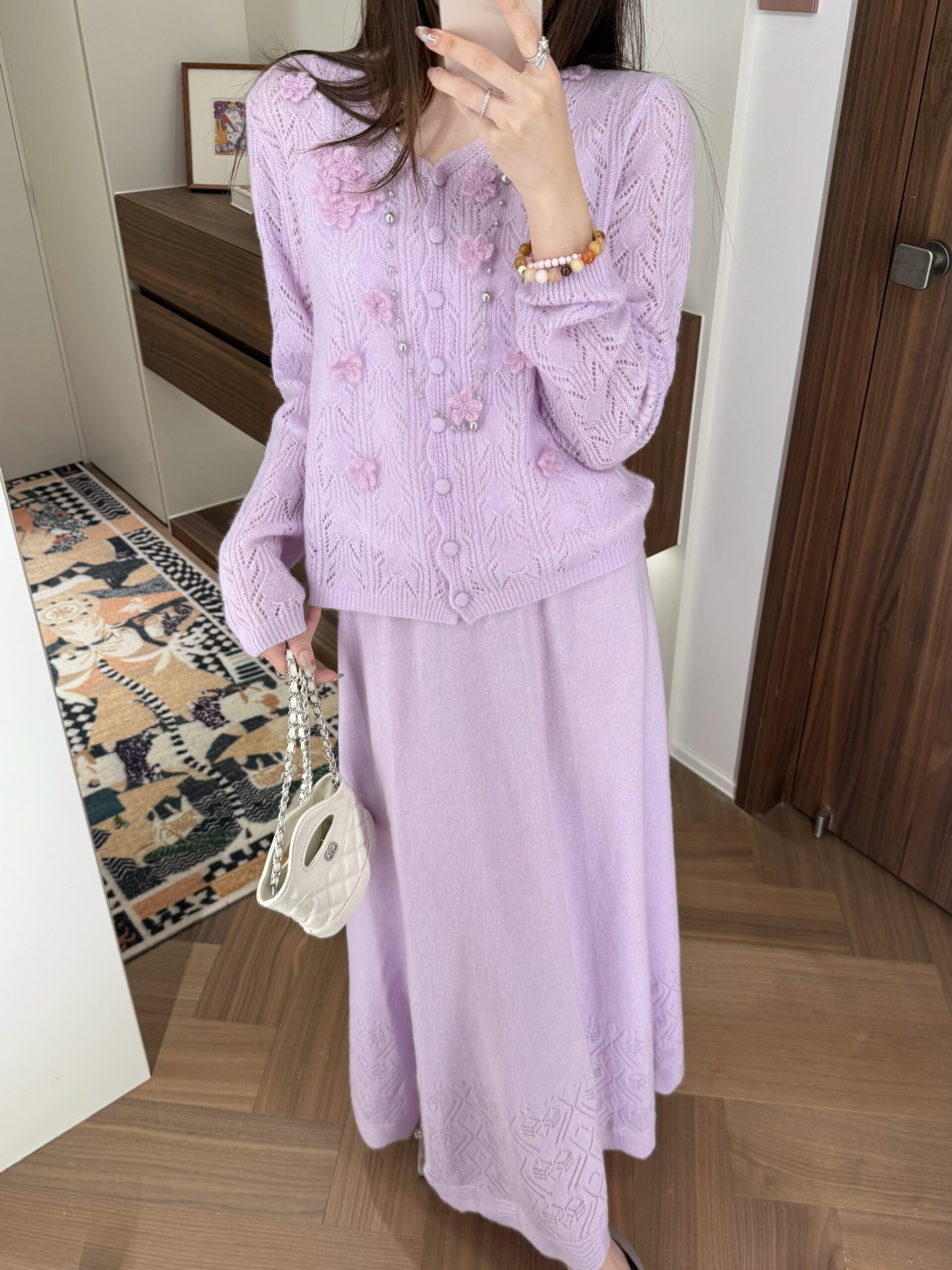
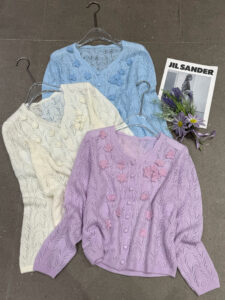
In the bulk production of knitwear, fabric selection directly determines product positioning, cost control, production efficiency, and terminal market sales. Wool and cashmere are two of the most mainstream natural warm knitting materials, widely used in sweaters, cardigans, knit dresses and other apparel. Many bulk purchasers and manufacturers often confuse the two materials, leading to inaccurate product positioning, cost overruns or customer complaints. This article systematically compares wool and cashmere knitwear from raw material characteristics, tactile appearance, wear durability, production adaptability, cost and applicable scenarios, providing a clear selection standard for large-scale mass production.
1. Raw Material Source & Essential Characteristics
Wool
Wool refers to sheep wool, which is extracted from the fleece of common domestic sheep. It is a renewable and mass-producible natural fiber with abundant global supply. The fiber diameter of conventional wool ranges from 18μm to 40μm, with thick fiber texture, high rigidity and strong structural stability.
As a mature industrial textile raw material, wool has standardized breeding, shearing, processing and washing procedures. The raw material grading system is complete, and the supply is stable all year round, which can fully meet the demand of large-volume continuous bulk production.
Cashmere
Cashmere is derived from the underdown of cashmere goats, only grown on the abdomen and underbelly of cashmere goats. It is a rare special animal fiber. Each cashmere goat can only produce 200-300 grams of pure cashmere per year, with extremely low yield.
Cashmere fiber is extremely fine, with a diameter of only 14μm-16μm, soft and slender. Limited by animal breeding and seasonal growth, cashmere raw materials are scarce, with obvious seasonal supply and strict grade differentiation. It is difficult to support ultra-large-scale low-cost bulk production.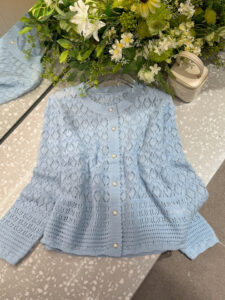
2. Hand Feel, Appearance & Wearing Experience
Wool Knitwear
Wool knitwear has a distinct fiber texture, with a solid and three-dimensional hand feel. The fabric has good stiffness and shape retention, not easy to be loose and deformed. High-count fine wool is soft and skin-friendly, while conventional medium and coarse wool has slight fuzziness and a little prickle on sensitive skin.
In terms of appearance, wool knitwear has clear weaving lines, neat fabric surface, strong vertical sense and good drapability. It has moderate air permeability and excellent warmth retention, with outstanding wind resistance. It is not easy to pill in daily wearing, and the fabric is wear-resistant and tolerant to washing.
Cashmere Knitwear
Cashmere knitwear is known for “soft and cloud-like” hand feel, with zero prickle, extremely silky and fluffy touch. The fiber is fine and dense, the fabric is light and thin but warm, realizing “light warmth without heaviness”.
The surface of cashmere fabric is delicate and hazy, with natural fine velvet luster and high-grade matte texture, no stiff feeling. The disadvantage is that cashmere fiber is soft and weak, resulting in poor fabric stiffness. Long-term wearing and friction are prone to pilling, and the fabric is easy to stretch and deform under external force.
3. Bulk Production Adaptability & Process Difficulty
Wool Production Advantages
Wool is highly adaptable to industrial production. It is compatible with all conventional knitting machines, including flat knitting machines and circular knitting machines, and supports various weaving processes such as plain weave, rib weave, jacquard and hollow-out.
The raw material uniformity of wool is high, the dyeing and finishing rate is stable, the color difference of large goods is easy to control, and the defective rate is low. Wool has strong tolerance to temperature and water washing in post-finishing, with low process loss, high finished product yield and fast production cycle, which is very suitable for large orders, quick orders and standardized mass production.
Cashmere Production Limitations
Cashmere has high requirements on production equipment and workers’ technology. The fine fiber is easy to break during weaving, resulting in needle holes, thin spots and broken threads on the fabric.
Cashmere dyeing process is complex, with strict requirements on water temperature, dyeing time and auxiliaries. Large-batch dyeing is prone to color difference and color cast. In addition, cashmere is easy to shrink and deform during washing and finishing, with high process loss, low finished product yield and long production cycle. It is more suitable for small-batch high-end customized production, not for low-end large-volume rushing orders.
4. Cost & Profit Margin (Core Factor for Bulk Production)
Wool
Wool raw materials are affordable and priced stably. The processing cost is low, the loss rate in production is controllable, and the overall comprehensive cost is moderate.
With stable supply and standardized production, wool knitwear has a transparent market price, moderate profit margin, low market risk, and strong cost performance. It is the first choice for mass-market bulk orders and mass sales products.
Cashmere
Cashmere raw materials are expensive, with high purchase cost. The complex production process leads to high labor cost and process loss cost.
The comprehensive cost of cashmere products is far higher than wool, with high unit price and high profit margin, but the market audience is narrow, sales volume is limited, and it is easy to cause inventory pressure in large-batch production. It is only suitable for high-end luxury line products.
5. Applicable Scenarios & Bulk Selection Suggestions
Choose Wool for Bulk Production When:
1. Mass-market daily knitwear, such as basic sweaters, casual cardigans, parent-child outfits and wholesale stock clothes;
2. Orders with strict cost budget, requiring high cost performance and stable delivery;
3. Garments needing good shape retention, wear resistance and easy daily care;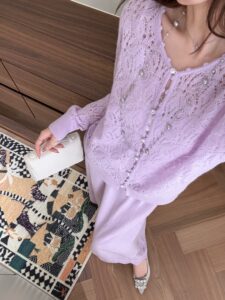
4. Fast fashion bulk orders, large-volume repeat orders and cross-border bulk wholesale orders.
Choose Cashmere for Bulk Production When:
1. High-end light luxury knitwear, boutique customized clothing and high-end gift apparel;
2. Winter high-end core products with high positioning, high unit price and high profit;
3. Small-batch and multi-style orders focusing on texture, grade and wearing comfort;
4. Brand flagship models and high-end customer group exclusive products, not pursuing ultra-large sales volume.
Conclusion
For bulk knitwear production, wool is a cost-effective, stable and industrialized universal material, adapting to most mass-market, large-volume and fast-delivery orders, which is the mainstream choice for mass production. Cashmere is a high-grade, high-cost, high-texture rare material, suitable for small-batch high-end customized production and high-profit premium products, not suitable for blind large-volume stock production.
Manufacturers and purchasers can accurately select materials according to product positioning, budget, target customer groups and order volume, so as to balance production efficiency, cost control and market competitiveness to the greatest extent.